
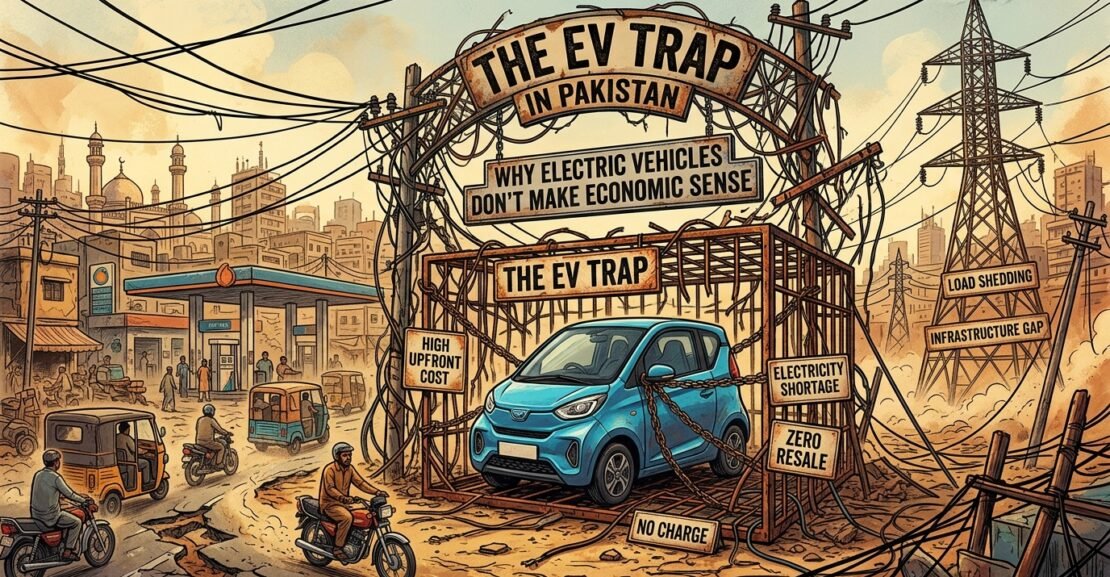
The EV Trap in Pakistan: Why Electric and Plug-In Hybrid Cars Make Zero Economic Sense
The False Dawn of EVs in Pakistan
Automakers market electric and plug-in hybrid vehicles as the ultimate solution to Pakistan’s fuel crisis. Showrooms buzz with promises of zero-emission driving and massive savings. Buyers flock to new EV and PHEV models. Starting prices often exceed 8 to 15 million rupees.
This initial excitement masks a harsh economic reality. High upfront vehicle costs immediately erase theoretical fuel savings. Drivers face severe charging infrastructure deficits across the country. Hidden ownership expenses quickly drain bank accounts. The illusion of free charging collapses fast. Owners soon realize the massive solar battery investment required to power these cars at night.
Pakistan’s fragile energy grid relies heavily on imported fossil fuels. Switching from imported petrol to imported battery technology fails to fix the national economic drain. These vehicles remain financially unviable for the average citizen. The current hype simply obscures a fundamentally flawed economic equation.
The Myth of Free Home Solar Charging
Automakers aggressively sell the dream of free home solar charging. Dealerships tell buyers they can simply plug their new EV into existing solar panels. This promise falls apart upon basic scrutiny. Most electric vehicle owners drive their cars during daylight hours. The sun generates peak solar power exactly when the vehicle sits miles away in an office parking lot. Owners return home at night to charge. Solar panels produce zero electricity after sunset.
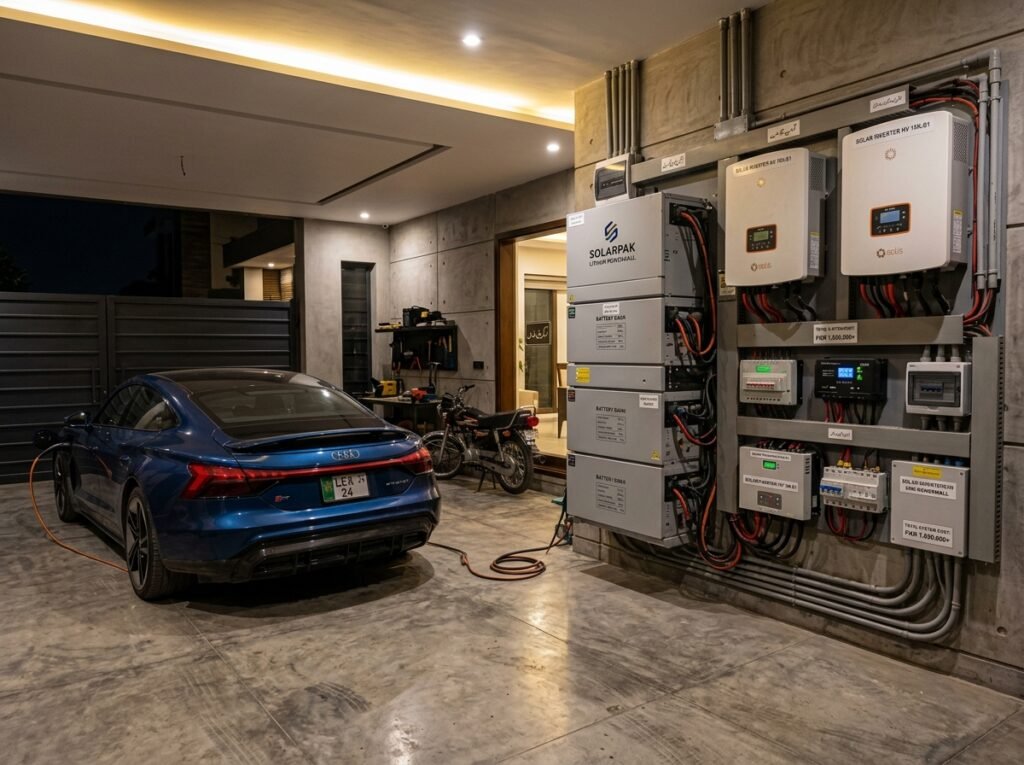
To utilize daytime solar energy for nighttime charging, owners must purchase massive home battery storage systems. A standard home solar battery stores barely enough power for basic household appliances. Charging a 60 kWh vehicle battery requires an equally massive home storage solution. These lithium-ion solar batteries cost millions of rupees.
An average Pakistani household solar setup peaks at 5 to 10 kilowatts. This capacity barely covers summer air conditioning loads. EV buyers must install significant additional solar capacity just for the vehicle. If an EV requires 40 kWh to charge, the owner must add corresponding solar panels to the roof.
This reality shatters the illusion of zero-cost driving. The true upfront capital requirement balloons massively. Buyers pay the premium for the electric car itself. They then pay for the additional rooftop solar panels. Owners finally purchase expensive lithium batteries to hold that solar charge until nightfall.
A typical electric car features a massive 60 kWh battery. Filling that capacity at home demands serious dedicated infrastructure. Drivers cannot use the regular grid at night without paying exorbitant rates. The national power grid imposes heavy taxes on peak nighttime electricity usage. Owners trapped by these utility tariffs rely entirely on their personal solar batteries.
The total initial expenditure often exceeds the petrol savings of an entire decade. Solar components naturally degrade over time. Grid-tied inverters fail due to constant voltage fluctuations. Expensive solar storage batteries eventually lose their original capacity. Homeowners find themselves continuously replacing costly imported tech components. You essentially prepay for years of imported hardware rather than buying fuel. Free charging simply does not exist. It just demands an exorbitant upfront payment.
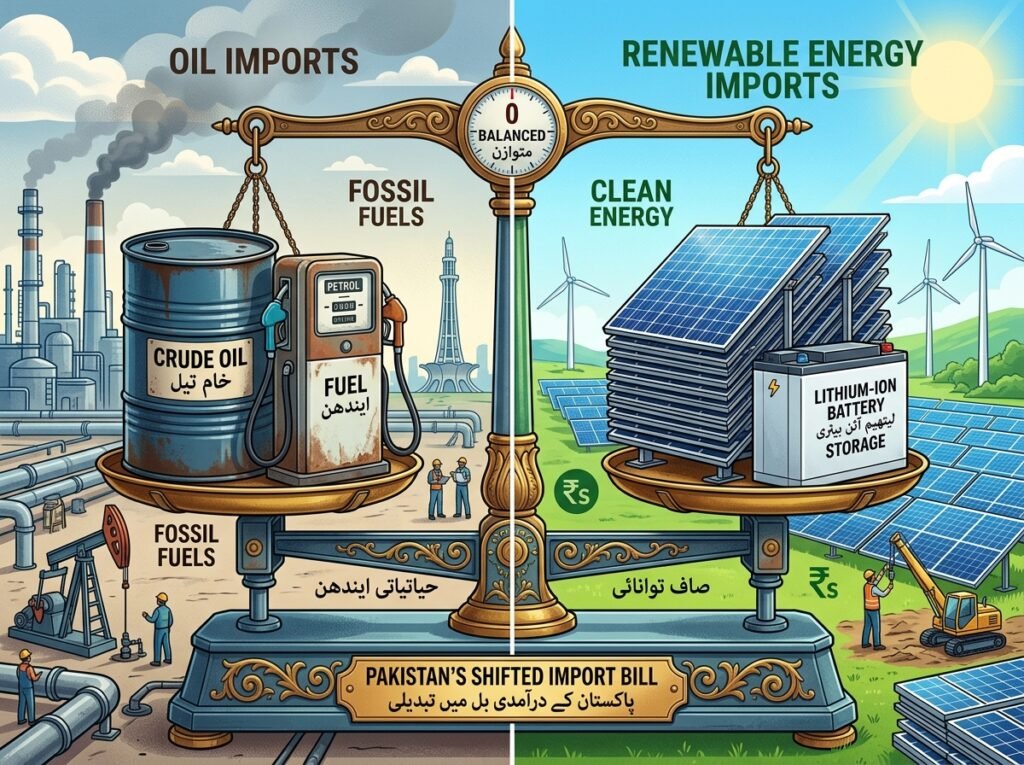
Grid Realities and the Shifting Import Bill
Pakistan’s power generation relies heavily on imported fossil fuels. The national grid burns expensive Liquefied Natural Gas, coal, and furnace oil to meet baseline demand. Electric vehicles do not magically eliminate energy consumption. The law of conservation of energy dictates that energy simply changes forms. Charging an electric car merely shifts the combustion process. It moves emissions from the vehicle tailpipe to a distant thermal power plant. You essentially still drive on imported fossil fuels.
Thermal power plants convert these imported fuels into electricity with massive thermal losses. That electricity then travels through hundreds of miles of fragile transmission lines. Rampant line losses waste a significant percentage of this generated power. Our power distribution network already suffers from daily rolling blackouts. Adding thousands of high-capacity electric vehicles will immediately overwhelm aging neighborhood transformers.
Proponents claim EVs will slash the national petroleum import bill. This calculation ignores vital macroeconomic realities. The overall import burden will not shrink. It will simply pivot toward different expensive commodities. Instead of importing refined petrol, Pakistan must import heavy lithium batteries and specialized electronic parts.
The macroeconomic drain multiplies rapidly across the sector. Citizens combatting load shedding continuously import billions of dollars in solar panels and home storage systems. The state continues paying foreign currency for power plant fuel. Simultaneously, vehicle buyers drain foreign exchange reserves to purchase expensive foreign EV components. Electric mobility forces Pakistan into a severe double-layered trap of constant technological imports. Plug-in vehicles provide zero absolute energy independence for the national economy.
Commercial Charging Costs and Real-World Range
Electric and plug-in hybrid vehicles fail to deliver promised economic benefits in Pakistan. Proponents heavily promote cheap home charging. They ignore the brutal reality of commercial charging networks. Station operators demand predatory rates. Current prices fluctuate aggressively between 120 and 170 rupees per electricity unit. These exorbitant tariffs immediately destroy the cost advantage of electric mobility. You pay near-combustion prices for battery power.
Commercial charging stations also suffer from severe operational inconsistencies. Unpredictable national load shedding disrupts public charging infrastructure daily. You cannot rely on a commercial station during peak summer hours. Grid failures leave drivers stranded with empty batteries. Backup generators at charging hubs burn expensive imported diesel. This entirely defeats the environmental purpose of an electric vehicle. The required charging hardware degrades quickly under harsh local conditions.
Real-world driving conditions further expose the electric vehicle trap. Automakers advertise highly optimistic battery ranges tested in perfect laboratory environments. The harsh climate of Pakistan drastically cuts these official figures. Extreme summer temperatures force the air conditioning compressor to run continuously at maximum capacity. This draws massive power directly from the main lithium battery pack. Hot pavement accelerates battery thermal management power drain.
Poor road conditions demand constant acceleration and heavy braking. Stop-and-go traffic severely kills electric motor efficiency over long distances. Carrying heavy passenger loads further drains the vehicle energy reserves. Aggressive local driving habits eliminate any chance of achieving optimal regenerative mileage. A car advertising 400 kilometers of range often barely manages 200 kilometers during a typical Pakistani summer.
This rapid battery drain forces drivers to use expensive commercial chargers more frequently. The combined burden of high commercial rates and degraded vehicle range makes zero economic sense. Buyers spend millions extra upfront for a battery-powered car. Owners must then install massive additional solar arrays and home batteries. They need this equipment just to charge their cars during nighttime hours. This hidden requirement doubles the actual total upfront purchase cost. You then face massive per-unit electricity costs on the road. Mild and strong hybrids offer far better financial security. They generate their own electricity without ever relying on an unstable national grid.
Rapid Tech Obsolescence and Brutal Depreciation
Battery technology remains fundamentally immature. Automakers race to release updated electric vehicle platforms annually. Each new model introduces drastically superior energy density and charging speeds. This relentless innovation cycle creates a severe financial trap for early adopters. A brand-new electric or plug-in hybrid car becomes outdated almost immediately. Buyers essentially purchase expensive consumer electronics on wheels.
The Pakistani auto market relies heavily on strong resale values. Local consumers typically replace their personal vehicles every three to five years. This cultural habit conflicts directly with electric vehicle economics. Traditional internal combustion engines and strong hybrids hold their financial worth reliably. Buyers trust their proven mechanics and established local parts networks.
Electric vehicles suffer catastrophic depreciation curves. Nobody wants to buy a used car carrying obsolete battery technology. A three-year-old EV features degraded cells and outdated software architecture. Secondary buyers refuse to pay a premium for severely limited driving ranges. They know they might soon face a battery replacement costing millions of rupees.
Plug-in hybrid electric vehicles and range-extended electric vehicles face identical depreciation trajectories. Their complex dual-powertrains introduce even more failure points. Second-hand buyers correctly avoid aging PHEVs. The dual maintenance costs destroy any perceived initial savings.
This market reality forces massive resale losses onto the original owner. You spend heavily on the initial showroom purchase. You lose heavily during the inevitable resale. Every year you own these vehicles, their market value plummets exponentially. You absorb the harshest depreciation hit simply because the global battery industry has not yet stabilized.
Hidden Environmental Impacts and Total Upfront Costs
Buyers rarely calculate the true initial price of an electric vehicle. You must look beyond the dealership invoice. A modern EV or PHEV demands a massive home infrastructure investment. You cannot rely on Pakistan’s unstable grid for charging. You must install additional solar panels to cover the immense daily energy draw.
A standard EV features a 50 to 80 kWh battery. Matching this capacity requires adding at least 10 to 15 kilowatts of solar generation. You must also install expensive residential battery storage. You need these home batteries because you drive during the day and charge at night. This required solar equipment easily adds Rs. 2 million to 3 million to your purchase. A mid-range electric vehicle already costs Rs. 10 million to 15 million. Your total upfront capital expenditure rapidly approaches Rs. 18 million. Traditional internal combustion engine vehicles require zero infrastructure upgrades. You simply buy the car and drive it.
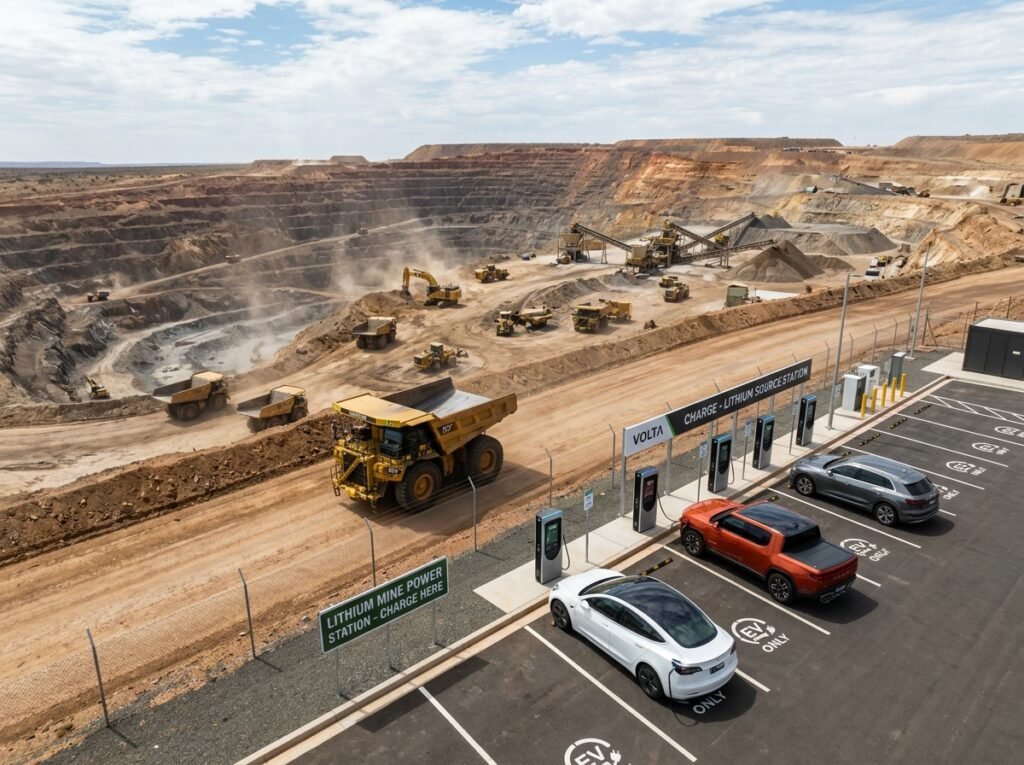
These massive costs buy an environmentally questionable product. Electric vehicle advocates heavily promote zero tailpipe emissions. They conveniently ignore the massive ecological destruction upstream. Manufacturing a heavy EV battery causes severe environmental damage. Lithium extraction requires millions of gallons of water per ton of yield. This mining process devastates local water tables and poisons surrounding soil.
Battery factories consume immense amounts of energy during cell fabrication. This energy frequently comes from burning coal or natural gas. An electric vehicle carries a massive carbon debt before it ever travels a single kilometer. Internal combustion engines and strong hybrids avoid this colossal initial manufacturing footprint. They feature much smaller batteries or no batteries at all. Their production processes remain far less resource-intensive.
The sheer weight of large battery packs increases tire wear significantly. This forces frequent tire replacements. These heavier cars shed microplastics into the environment at an alarming rate. Traditional cars weigh significantly less and consume tires normally. Pakistani consumers absorb extreme financial penalties to fund this ecological damage. The illusion of a clean electric future collapses under basic financial scrutiny.
Why Mild and Strong Hybrids Remain the Superior Choice
Mild and strong hybrids offer the most practical solution for Pakistani drivers. They drastically improve fuel economy without chaining owners to an unreliable power grid. Electric vehicle drivers face constant anxiety over unexpected load shedding. They also endure extortionate commercial charging rates fluctuating between Rs. 120 and Rs. 170 per unit. Hybrids completely bypass these infrastructural nightmares. You simply fill the fuel tank and drive.
Local driving conditions severely punish fully electric vehicles. Extreme summer heat forces maximum air conditioning usage. Congested city roads create endless stop-and-go traffic patterns. Heavy passenger loads and poor road surfaces degrade battery efficiency. These factors instantly slash advertised EV ranges. Mild and Strong hybrids excel in these exact environments. Their regenerative braking systems capture kinetic energy during heavy traffic. They continuously recharge their small onboard batteries without external plugs.
This self-sustaining technology perfectly aligns with Pakistan’s economic reality. Buyers avoid the massive capital requirements of installing off-grid residential solar systems. Hybrids maintain excellent resale value because their core internal combustion technology remains stable. Fully electric cars suffer brutal depreciation as evolving battery chemistries render older models obsolete yearly.
Policymakers falsely claim electric vehicles reduce the national import bill. This transition simply shifts dependency from crude oil to imported lithium cells and proprietary electronics. Hybrid vehicles offer a realistic alternative. They immediately slash daily fuel consumption by 15%-20% percent. They achieve this without requiring a costly nationwide overhaul of power distribution networks. Strong hybrids deliver immediate economic relief to both the consumer and the state.
Frequently Asked Questions
Are electric vehicles (EVs) cheaper to own than petrol cars in Pakistan?
While EVs offer lower running costs per kilometer, their high initial purchase price, steep depreciation, and expensive battery replacement costs often outweigh fuel savings. In Pakistan’s current market, the total cost of ownership for a traditional combustion engine or a standard hybrid remains lower over a five-year period.
Why are plug-in hybrids (PHEVs) considered a poor investment in Pakistan?
Plug-in hybrids are often seen as an “economic trap” due to their complexity. They combine both internal combustion engines and electric drivetrains, leading to higher maintenance costs. In Pakistan, the lack of charging infrastructure and the heavy premium paid for PHEV technology rarely results in a positive return on investment.
How does the lack of charging infrastructure affect EV adoption?
Pakistan currently lacks a reliable, nationwide public fast-charging network. This limits EVs to urban commuting, as long-distance travel remains risky due to “range anxiety.” Without standardized charging stations and a stable power grid, EV owners face significant logistical challenges that diminish the practical utility of their high-cost investment.
Do electric cars have a good resale value in the Pakistani market?
Currently, EVs suffer from higher depreciation rates compared to popular local petrol or hybrid models. Concerns over battery health, the absence of specialized after-sales service centers, and the rapid evolution of battery technology make used EVs less attractive to local buyers, leading to a significant loss in resale value.
Can Pakistan’s power grid support a mass transition to electric vehicles?
Pakistan’s power sector faces consistent challenges, including circular debt and transmission losses. A mass transition to EVs would place immense pressure on an already unstable grid. Furthermore, with electricity tariffs rising frequently, the perceived “cheap” cost of charging an EV is steadily narrowing compared to efficient petrol alternatives.
Sources & References
- EV Prices and Market Overview in Pakistan
- Pakistan’s Energy Mix and Import Bill
- Electric Vehicle Charging Infrastructure and Load Management
- The True Cost of Solar Battery Storage Systems
- NEPRA State of Industry Report – Pakistan Power Generation Mix
- Pakistan Economic Survey – Analysis of Import Bills and Foreign Reserves
- EV Charging Prices in Pakistan 2025 — Cost Per kWh Guide
- The Hidden Depreciation Costs of Electric Vehicles
- Battery Tech Advancements and EV Market Obsolescence
- Lithium Mining’s Hidden Environmental Costs
- Solar PV and Battery Storage Prices in Pakistan
- Pakistan EV Charging Tariffs and Grid Realities
- The True Cost of Electric Vehicle Depreciation


